

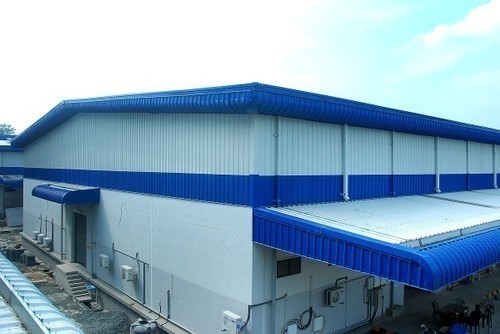
Warehouse Construction Using Pre-Engineered Buildings (PEB)
With the rapid growth of logistics, e-commerce, and manufacturing, warehouses have become a critical part of modern infrastructure. Pre-Engineered Buildings (PEB) offer an ideal solution for warehouse construction by combining speed, strength, flexibility, and cost efficiency. PEB warehouses are designed to meet high operational demands while ensuring long-term performance.
What Is a PEB Warehouse?
A PEB warehouse is a steel structure designed, fabricated, and manufactured in a factory-controlled environment and then assembled at the project site. Each component is engineered to exact specifications, ensuring faster construction, superior quality, and optimal space utilization compared to conventional warehouse construction.
Why Choose PEB for Warehouse Construction?
1. Faster Construction Time
PEB warehouses are fabricated off-site, allowing site preparation and manufacturing to run simultaneously. This significantly reduces project timelines and enables quicker operational start-up.
2. Cost-Effective Solution
Optimized steel usage, reduced labor requirements, and minimal material wastage make PEB warehouses highly economical without compromising structural integrity.
3. Large Clear Spans
PEB systems allow wide column-free spaces, making them ideal for storage, material handling, racking systems, and smooth movement of goods.
4. High Strength & Durability
Designed to withstand heavy loads, high wind speeds, seismic forces, and harsh weather conditions, PEB warehouses ensure long-term reliability.
5. Design Flexibility & Expansion
PEB warehouses can be easily customized in terms of height, layout, ventilation, insulation, and can be expanded in the future with minimal disruption.
Key Components of a PEB Warehouse
- Primary Steel Structure: Columns and rafters designed to carry main structural loads.
- Secondary Members: Purlins, girts, and bracing systems for stability.
- Roof & Wall Cladding: Metal sheets or insulated panels for protection and thermal control.
- Ventilation Systems: Ridge ventilators, louvers, and skylights for natural lighting and airflow.
- Accessories: Dock doors, rolling shutters, canopies, gutters, and downspouts.
Applications of PEB Warehouses
PEB warehouses are suitable for a wide range of industries, including:
- Logistics and distribution centers
- E-commerce fulfillment hubs
- FMCG and retail storage
- Cold storage and food warehouses
- Manufacturing and raw material storage
- Pharmaceuticals and chemical storage
PEB Warehouse vs Conventional Warehouse Construction
| Feature | PEB Warehouse | Conventional Warehouse |
|---|---|---|
| Construction Speed | Very Fast | Slow |
| Cost Efficiency | High | Moderate to High |
| Clear Span Space | Large | Limited |
| Quality Control | Factory-Assured | Site-Dependent |
| Maintenance | Low | Higher |
Sustainability Benefits of PEB Warehouses
PEB warehouse construction supports sustainable practices through recyclable steel, reduced construction waste, energy-efficient insulation, and optimized natural lighting. These features help lower operational costs and environmental impact.
Conclusion
Warehouse construction using Pre-Engineered Buildings is a smart and future-ready solution for businesses seeking speed, scalability, and durability. With flexible designs, cost advantages, and faster delivery, PEB warehouses provide an efficient infrastructure to support modern supply chain and storage needs.
Choosing a PEB warehouse ensures your operations are built on a strong, reliable, and scalable foundation.

